
How Medication Supports Positive Health Change
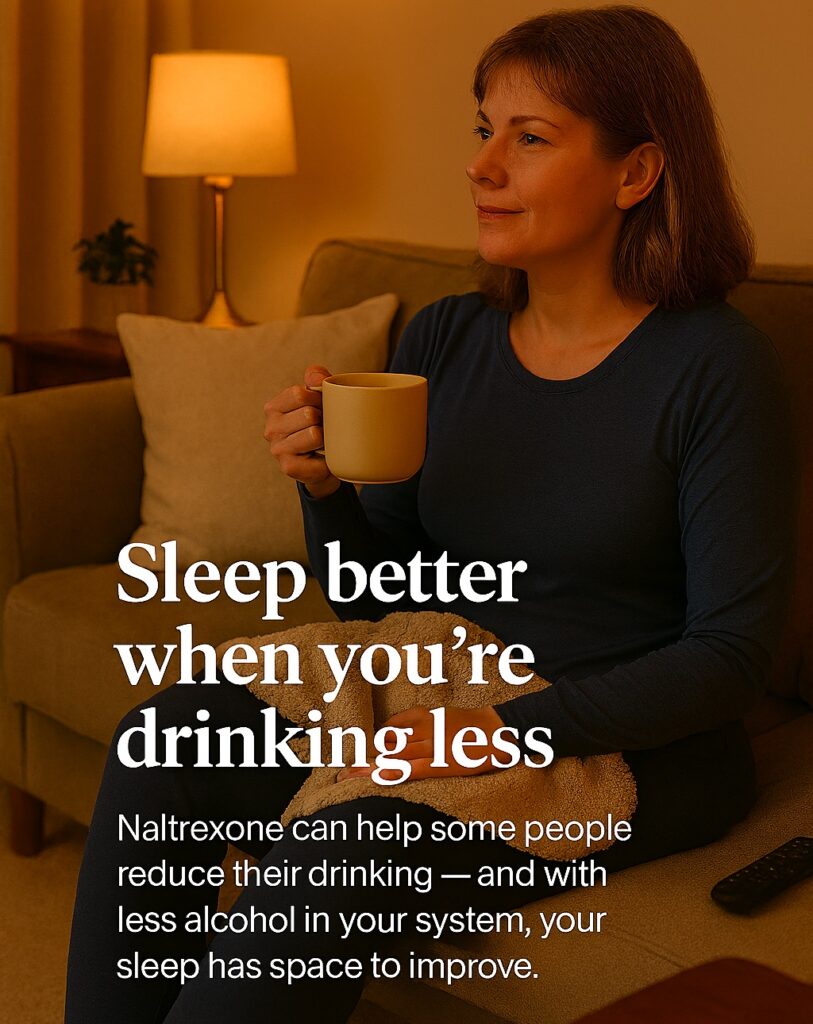
For many people, the goal isn’t to stop drinking entirely — it’s simply to feel better.
Better sleep. Better mornings. Better energy. Better mood.
But reducing alcohol intake can be harder than expected, even when motivation is strong. Habits form over years, and the brain’s reward pathways can make “just one more” feel automatic rather than intentional.
This is where the medications we use has attracted growing clinical interest.
Naltrexone at 50mg doses works neurologically by blocking opioid receptors in the brain that are involved in alcohol’s reward response. Over time, this reduces the pleasurable reinforcement associated with drinking — meaning cravings can lessen and stopping after fewer drinks can feel more natural rather than forced.
As intake reduces, people often notice wider health benefits emerging.
Research and patient-reported outcomes frequently include:
- Improved sleep quality
- More restorative rest
- Reduced night-time waking
- Clearer thinking and concentration
- Improved mood stability
- Less next-day fatigue
Sleep improvements in particular are commonly reported. Alcohol may initially make people feel drowsy, but it disrupts REM sleep and overall sleep architecture. Drinking less allows the body’s natural sleep cycles to recover, which can have a knock-on effect on mental and physical wellbeing.
Many people are surprised that feeling better happens relatively quickly — not just after months, but sometimes within weeks of reduced intake.
Importantly, the medication isn’t about forcing abstinence. It supports behavioural change by helping the brain gradually reduce the urge to continue drinking beyond what was intended.
The result for many is simple but powerful:
Better balance.
Better control.
And ultimately — feeling better day to day.
Read more on our What is Naltrexone Page