
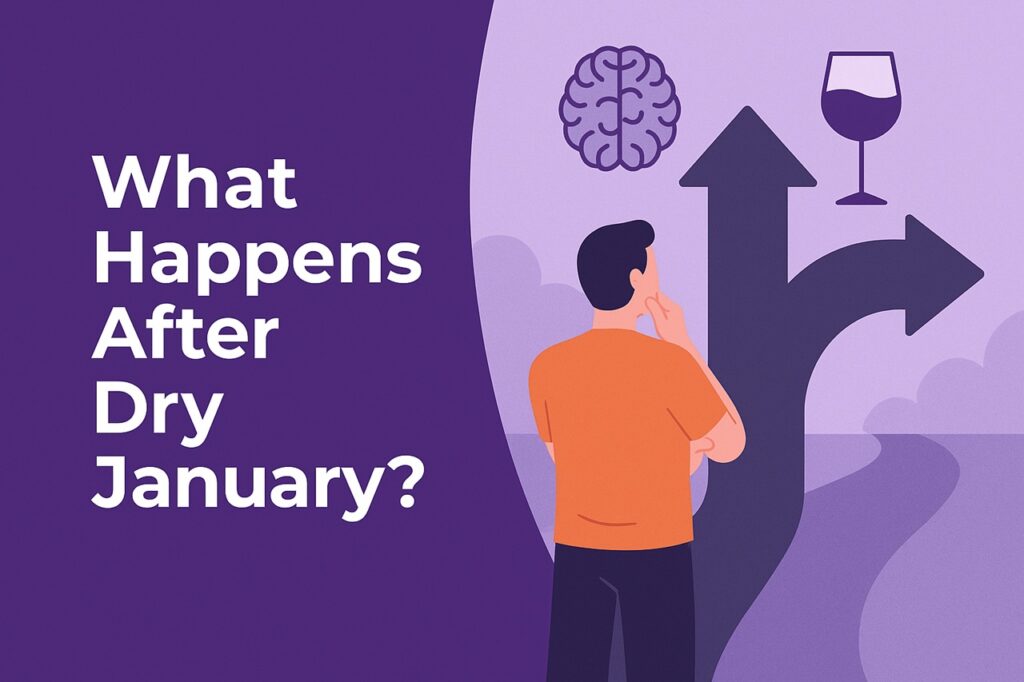
Completing Dry January — whether fully alcohol-free or with reduced drinking — is an achievement. It shows intention, awareness, and a willingness to reflect on habits. But once February arrives, many people are left with an important question:
What happens next?
For some, Dry January is a clean break that naturally leads to long-term change. For others, the structure disappears and old patterns slowly return. Social occasions resume, routines settle back in, and drinking can creep up again — often without much notice.
This doesn’t mean Dry January “didn’t work.” It means that one month alone doesn’t always change long-established habits.
Habits around alcohol are shaped over time by routine, environment, stress, and the brain’s reward system. A temporary pause can be helpful, but lasting change often needs more than determination alone. That’s where many people start thinking less about abstinence — and more about regaining control for the long term.
If this sounds familiar, it may be time to consider additional support.
For adults who want to reduce drinking permanently — without expensive therapy sessions or extreme rules — Naltrexone can be a helpful option. At doses of 50mg, it’s a medically proven treatment that works by reducing the brain’s reward response to alcohol, helping cravings and habitual over-drinking ease over time.
This approach isn’t about being told what to do. It’s for responsible adults who recognise their own patterns, want to make informed decisions, and understand that asking for help isn’t weakness — it’s awareness.
Dry January can be a starting point. But if you want change that lasts beyond one month, support that works with your brain — not against it — can make all the difference.
If you’re ready to think about long-term control rather than short-term challenges, you can apply now to see if Naltrexone is right for you.
Find out more at
www.drinklessmethod.co.uk